Applied AI · August–December 2020
Machine learning applied to conformal field theory
A proof of concept that neural networks can tell conformal field theory data apart, with 95% test accuracy on spin-correlator data.
The short version
Chen, He, Lal and Zaz (2020) introduced a machine-learning approach to classifying conformal field theories from synthetic data. This computer-science-minor capstone, co-authored with a fellow student in autumn 2020, set out to reproduce it, see how well it held up, and push it further.
PythonNumPyKeras/TensorFlowscikit-learnNeural networks (MLP)matplotlibJupyterGit
My CS-minor capstone at NISER Bhubaneswar, done alongside physics coursework. The reference paper is arXiv:2006.16114.
How
- Generated synthetic conformal-field-theory data with NumPy as the training data for every task.
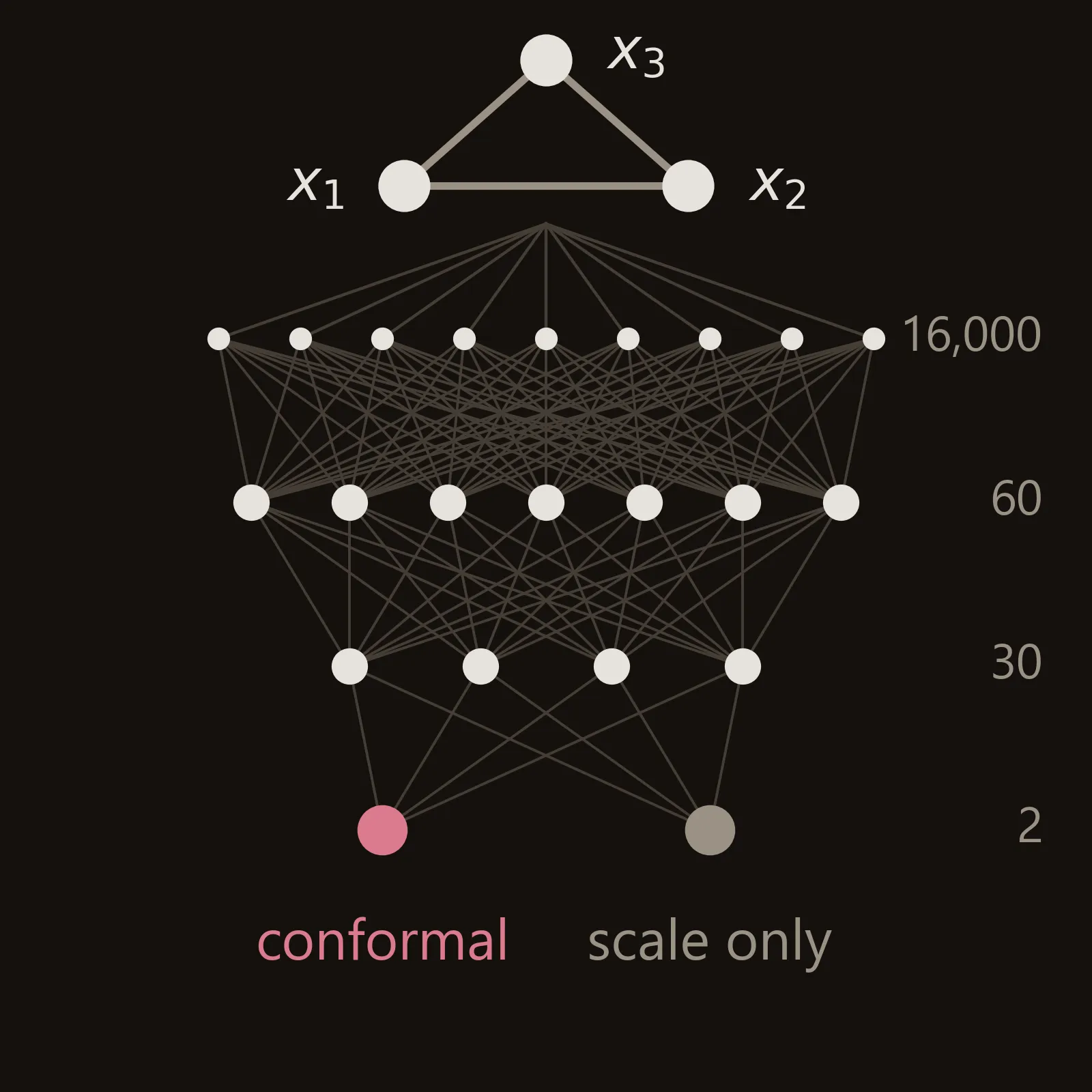
- Trained Keras/TensorFlow multilayer perceptrons (MLPs) on it, with scikit-learn for data splitting and matplotlib in Jupyter for the results. The spin-correlator classifier, two dense layers with dropout, reached 95% accuracy on 1,000 held-out test samples.
- Kept the pipeline in Git on separate
main,data-genandmodelbranches.
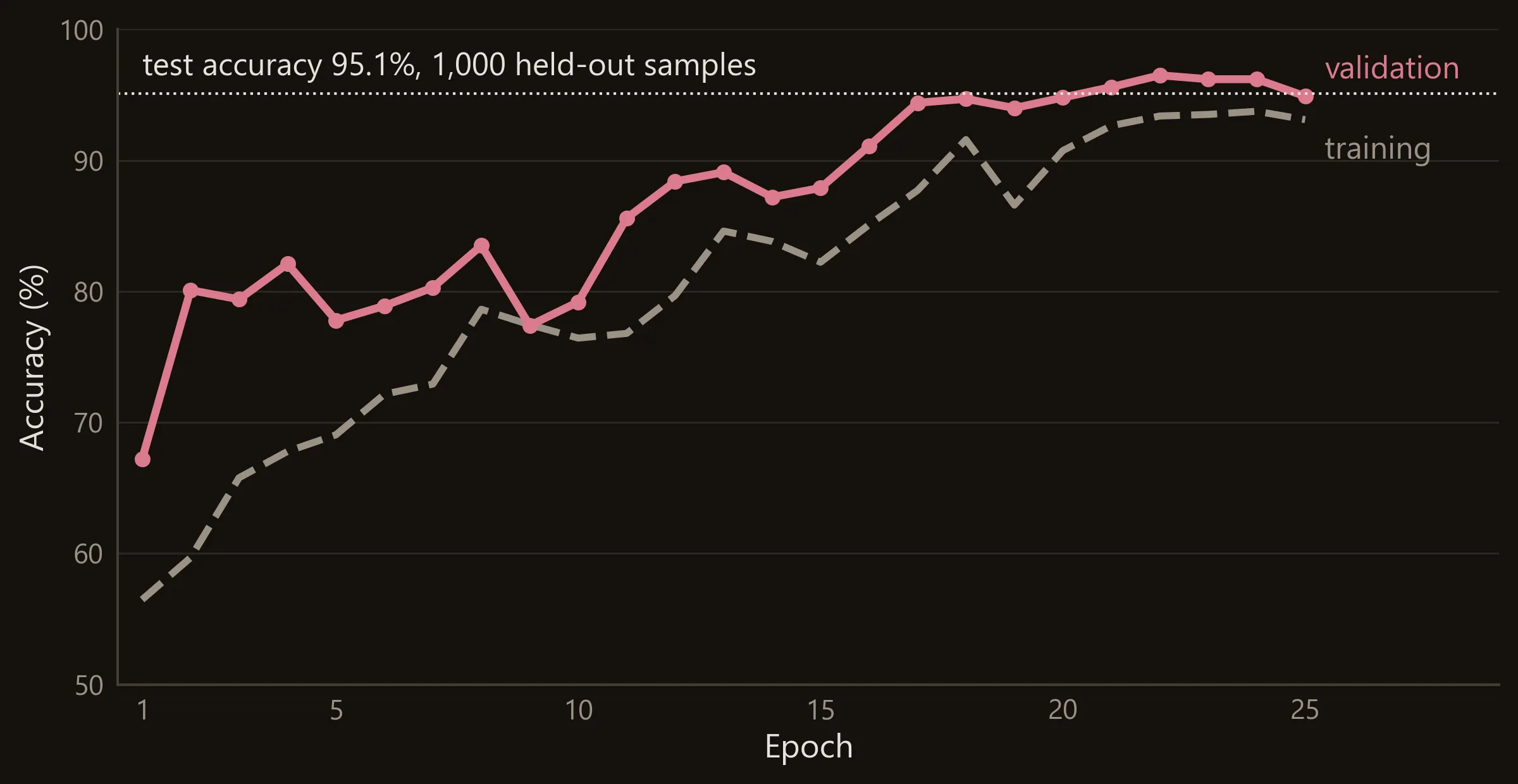 The spin-correlator classifier over its 25 training epochs, ending at 95.1% on held-out test data.